
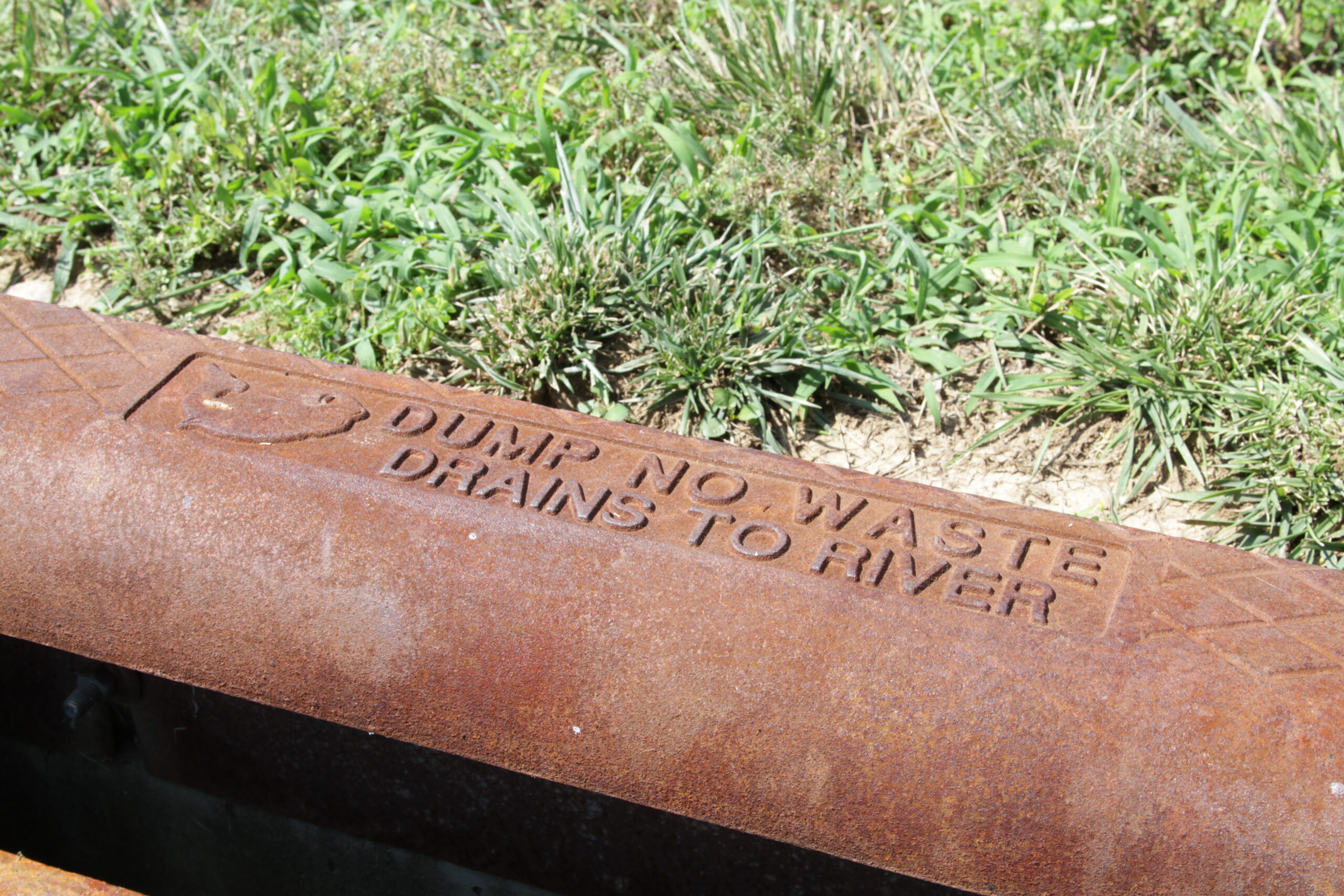
Do you ever notice those grates or open gaps in the curb, or the ditches running behind your neighborhood? Most people never give them a second thought – until the occasional cat or duckling gets stuck in the storm drain.
However, these drains play a critically important role in our community’s health and environmental well-being.
Environmental Impact
If you’ve ever stood at the curb during a heavy rain and watched water rush toward the stormdrain, you may notice what else the water picks up along the way – leaves, grass clippings, and more. But that water doesn’t just disappear. It flows into a system of underground pipes beneath the road into spillways, seeps into the ground, then continues into our local waterways.
Stormwater runoff has become a significant cause (about 40%) of our nation’s water pollution.
One of the biggest misconceptions is that water entering a stormdrain gets treated. According to the U.S. Environmental Protection Agency (EPA), most stormdrains are not connected to wastewater treatment plants. Instead, polluted stormwater runoff is commonly transported through municipal separate storm sewer systems (MS4s) and is discharged, untreated, making its way into local rivers, lakes, streams, and other bodies of water.
Why should you care? Think about it this way: everything that enters a storm drain in Nicholasville can eventually reach Town Branch Creek, Jessamine Creek and the Kentucky River.
Common Pollutants in Storm Drains
Stormwater runoff can pick up pollutants from streets, neighborhoods, parking lots, construction sites, and lawns. The Kentucky Energy and Environment Cabinet confirms stormwater runoff is one of the leading causes of water pollution in Kentucky. Pollutants such as oil, fertilizer, pet waste, sediment, litter, and chemicals spill into our waterways. Ultimately, untreated stormwater pollution can:
- Degrade drinking water sources
- Harm fish and aquatic life
- Increase bacteria levels that make waterways unsafe for recreation
- Add excess nutrients that fuel harmful algal blooms
- Deposit trash and microplastics into rivers and lakes
- Increase sediment, which smothers aquatic habitat
- Carry toxic metals and petroleum products into ecosystems
How You Can Help
The good news is that protecting our waterways doesn’t take much – just a handful of small habits. Here are 10 simple ways you can keep Nicholasville clean and our wonderful waterways healthy:
- Only rain belongs in storm drains. Never dump oil, chemicals, or waste.
- Use fertilizer and pesticides thoughtfully and sparingly.
- Put litter in its place (trash and recycling cans).
- Pick up after pets to prevent bacteria and nutrient pollution.
- Sweep driveways and sidewalks instead of hosing them off.
- Keep yard waste out of streets and drainage areas.
- Wash cars at a commercial car wash or on grassy areas.
- Recycle used motor oil at approved collection sites.
- Check your car regularly for leaks.
- Have your septic tank inspected every 3 – 5 years.
The next time you’re planning a day of fishing or floating on the Kentucky River, remember: the health of our waterways starts upstream. Rainwater entering Nicholasville’s stormdrains flows into local creeks and eventually the Kentucky River – carrying anything it picks up along the way. That’s why keeping pollutants out of storm drains helps protect the waterways our community enjoys.
If you ever notice someone dumping materials into a storm drain or drainage structure, you can contact City Hall so the issue can be addressed appropriately.
For more information about stormwater issues and water quality, visit the Environmental Protection Agency’s website.